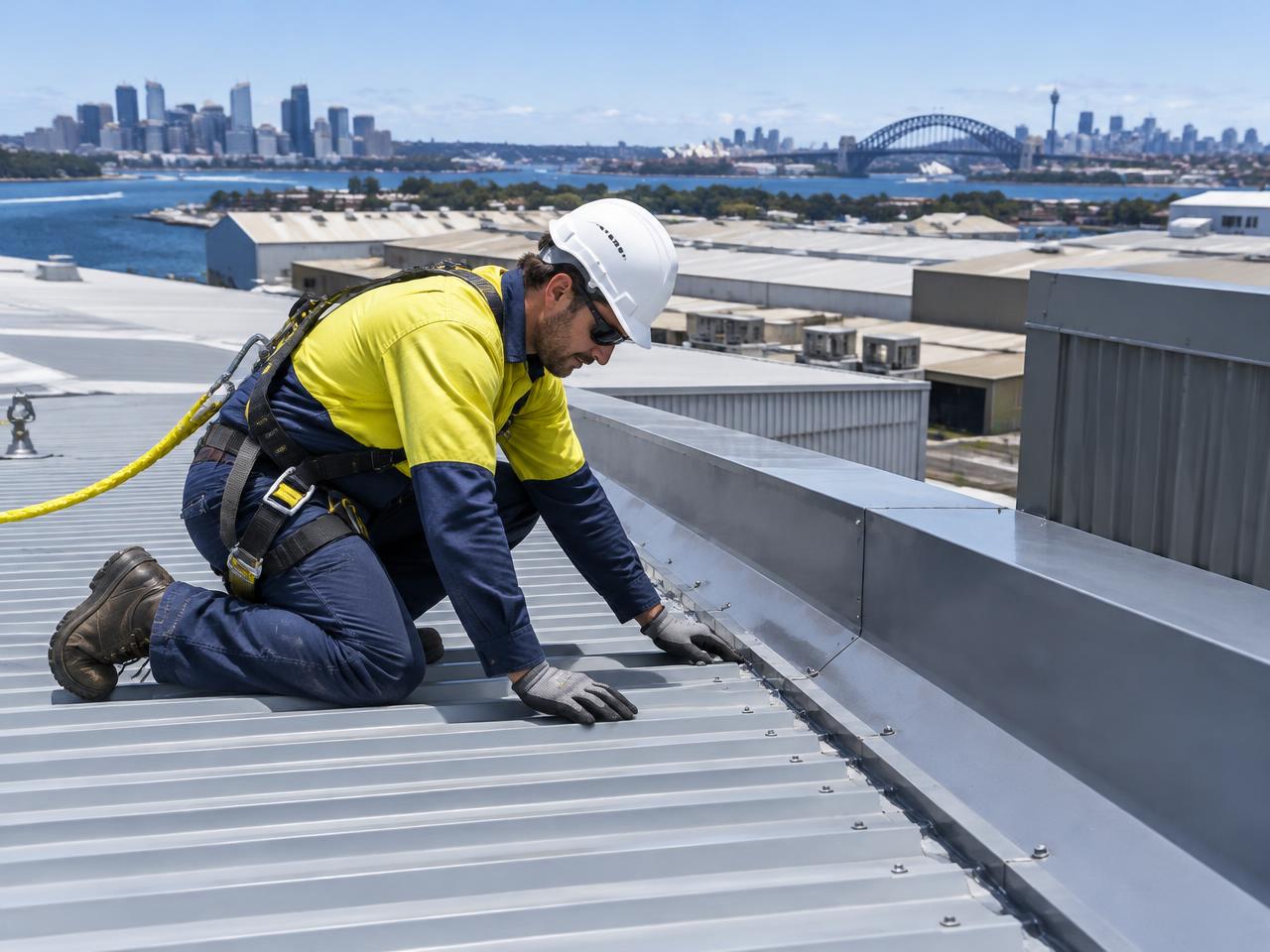
A commercial roof checklist should cover roof sheets, fixings, flashings, penetrations, box gutters, outlets and access arrangements. Connect each finding to a location and action, coordinate with the building manager and record inspection limits. Prioritise water entry and safety concerns before planning routine maintenance or appearance work.
Key takeaways
- Drainage, roof junctions and equipment access must be considered together.
- Keep a defect register with locations and completion status.
- A routine roof inspection is not certification of structural or equipment safety.
For property-specific care, explore commercial roof maintenance. The guidance below is general information, not an inspection of your property.
What should a building manager prepare?
Provide the site contact, authority to approve work, access arrangements and known roof history. Earlier reports, leak locations, tenant complaints and recent rooftop installations can help focus the assessment. Explain site inductions, operating restrictions and areas below the work that need protection or notification. A contractor cannot plan appropriate access from a roof size alone; the route and actual work area need consideration.
Confirm the purpose of the visit and what will be included. Routine maintenance planning is different from a concealed leak investigation or specialist structural advice. Ask how inaccessible sections will be recorded and which equipment-related issues need separate trades. A useful checklist defines those boundaries before listing inspection items, so a general review is not mistaken for certification of every roof or building component.
- Site contact and authorisation for access and work.
- Leak history, previous reports and a roof plan if available.
- Rooftop equipment, known hazards and tenant communication requirements.
Which roof-covering items should be assessed?
A metal commercial roof assessment may include visible sheet damage, corrosion, laps, fixings and washers. Flashings at parapets, penetrations and other junctions also need attention. The condition and compatibility of previous repairs can be relevant, particularly where a symptom recurs. Ask for findings to use consistent locations and photographs where possible so the manager can connect recommendations to the building rather than a general description.
Not all areas will necessarily be accessible during one visit. Equipment, fragile surfaces, weather and access restrictions may limit the inspection. Those limitations should remain visible in the record. Do not interpret an unreported area as sound, or assume that a sheet-level review also certifies structural components. Further specialist advice may be required where damage or movement raises questions outside the agreed scope.
How should box gutters and outlets be documented?
Record each accessible drainage section, visible debris, outlet condition and evidence of recurring overflow. Clearing one section does not establish that the full system is functioning or that concealed downstream pipework is clear. Internal drainage and parapet arrangements can make water paths difficult to view, so the inspection should explain what was checked and what needs further investigation. A cleaning visit does not redesign drainage or certify capacity.
Repeated overflow should be linked to its location and the conditions in which it occurs. Keep photographs and records of previous clearing or repairs so the next contractor can compare findings. A damaged outlet, corrosion or suspected downstream blockage requires a different response from ordinary leaf accumulation. Ask for those distinctions in the action list instead of grouping every issue under gutter cleaning.
What about plant, solar equipment and penetrations?
Rooftop equipment introduces roof junctions and separate specialist responsibilities. Tell the contractor about plant, panels, service routes and recent installation work. Roofing maintenance should not imply authority to disconnect or repair electrical or mechanical systems. Where equipment limits access or affects the proposed repair, the responsible specialist may need to coordinate with the roof contractor before work is approved.
Record the affected penetration or junction and any access restriction. A new leak near equipment is useful context, but location alone does not prove the installer caused it. The investigation should establish the supported findings and remaining uncertainty. Keep records of all relevant work so future reviews do not overlook a recent alteration or mistake a temporary repair for an original roof component.
How should defects be prioritised and approved?
Active water entry, loose materials and risks to occupied areas deserve attention before cosmetic concerns. The building manager should understand the location, reason and proposed action for each defect. A cause may be confirmed or still suspected; the report should distinguish those situations. Additional damage discovered after access improves should be discussed through an agreed scope-change process rather than treated as automatically authorised work.
Coordinate timing with tenants and safe weather conditions without promising that work can proceed on a fixed date regardless of hazards. For strata sites, confirm the scheme's authorisation process and responsibilities. Structural concerns, asbestos and electrical hazards may require specialist assessment outside the initial roofing scope. Keep those referrals in the register so an unresolved safety question is not lost when routine maintenance is completed.
What should the maintenance register contain?
Use a consistent reference for each location, supported by a plan or photographs where available. Record the finding, its priority, recommended action, approval status, completion details and any limitation. Keep the original inspection information alongside updates so the history shows why work was recommended. An area that was not inspected should remain marked as such until a suitable assessment is completed. A date alone does not establish that an outstanding issue is resolved.
Review the next maintenance interval from the roof condition, previous blockages, equipment changes and recurring symptoms. New leaks or severe weather may justify earlier assessment. Keep product details and relevant care instructions after repairs. This guide provides a general management checklist, not a report on any particular building or a guarantee of uninterrupted operation. The useful outcome is a clear, documented set of next actions for the actual site.
From guidance to an agreed work scope
What matters on a commercial roof?
Commercial roofing often combines metal sheets, internal drainage, parapets and equipment penetrations. The inspection should consider the path from roof surface to outlet, not just the appearance of the sheets. Box gutters and outlets deserve particular attention because a local obstruction can affect occupied areas below. A building manager should explain known leaks, roof access arrangements and recent works by other contractors. An assessment can then relate visible defects to the building layout and identify areas that need more investigation.
- Record sheet laps, fixings, flashing junctions and visible corrosion.
- Check accessible drainage outlets and signs of recurring overflow.
- Map penetrations around rooftop plant, skylights and access hatches.
How do you organise safe commercial roof access?
Before attendance, clarify site inductions, access permissions, tenant notification and any restrictions on work near equipment. An existing anchor point or access hatch is not proof that the full route or work area is safe. The contractor should assess the access method, fall risks, fragile surfaces and weather conditions. Do not ask staff to inspect the roof as a substitute for competent trades. Changes to the site or a new work scope may require the access plan to be reviewed.
- Confirm the building contact and authority to approve the work.
- Identify equipment or services that need separate specialist coordination.
- Plan protection for people, stock and occupied areas beneath the work.
Sources and further reading
- NSW SES: prepare your home and property for flood and storm: Roof checks, clear gutters and downpipes, and storm preparation.
- SafeWork NSW: managing risks of exposure to asbestos: Avoid disturbing asbestos and never use high-pressure water or compressed air on asbestos materials.
Plan the next step for your Sydney roof
Start with a roof condition inspection, then discuss preventative roof maintenance, targeted roof repairs or gutter and drainage care as appropriate. Keep the report, access limitations and approved scope with your property records.
Continue with our Sydney roof maintenance checklist. Request a roof assessment or call 0424 699 183 to discuss your property.
Frequently asked questions
Does a commercial roof inspection include rooftop equipment servicing?+
Not automatically. Electrical and mechanical systems may need separate qualified specialists; confirm the boundaries of the roof scope.
What makes a defect register useful?+
Consistent locations, photographs where available, priorities, actions, completion status and recorded inspection limitations.
Does gutter cleaning certify a commercial drainage system?+
No. Cleaning accessible sections is different from assessing concealed pipework, drainage design or capacity.