Tile roofs need checks of tiles, ridge capping, valleys and flashings. Metal roofs need checks of sheets, laps, compatible fixings, washers and drainage. Both need safe professional access and a condition-led plan. Choose maintenance for the existing roof system rather than applying the same treatment to every material.
Key takeaways
- The roof material changes the repair method, not the need for drainage care.
- A coating cannot replace a damaged component or resolve an unidentified leak.
- Check compatibility before accepting replacement tiles, fasteners or finishing products.
For property-specific care, explore roof repairs. The guidance below is general information, not an inspection of your property.
How does a tiled roof manage rainwater?
Tiles work as an arranged covering that sheds water down the roof. Their profile, position and relationship with surrounding components matter. A cracked tile, displaced section or disturbed junction can allow water into areas that normally remain protected. Ridge capping, valley metal and flashings need attention alongside the tiles; looking only for obvious cracks can miss other visible defects. The assessment should consider the roof arrangement and safe access rather than treating each tile in isolation.
Replacing a tile is not just a colour match. The replacement should suit the existing profile and fit correctly within the surrounding layout. Previous repairs can introduce mismatched parts or conceal nearby damage. Ask whether the proposed work also checks affected ridge or valley areas and how inaccessible sections will be recorded. Where the roof system is uncertain, identification should come before a repair method is selected.
- Look from ground level for displaced tiles or an uneven ridge line.
- Tell the roofer about water stains near valleys, chimneys or skylights.
- Keep spare-tile or product details when available.
What should be checked on a metal roof?
A metal roof assessment considers sheets, laps, fixings, washers, flashings and the path of water towards outlets. Visible rust may occur near an edge or fixing, but the extent of deterioration needs assessment rather than an assumption that a surface patch will resolve it. Materials must be compatible with the roof system. Ask about the condition of adjacent sheets and junctions before approving a local repair so the scope reflects the affected area.
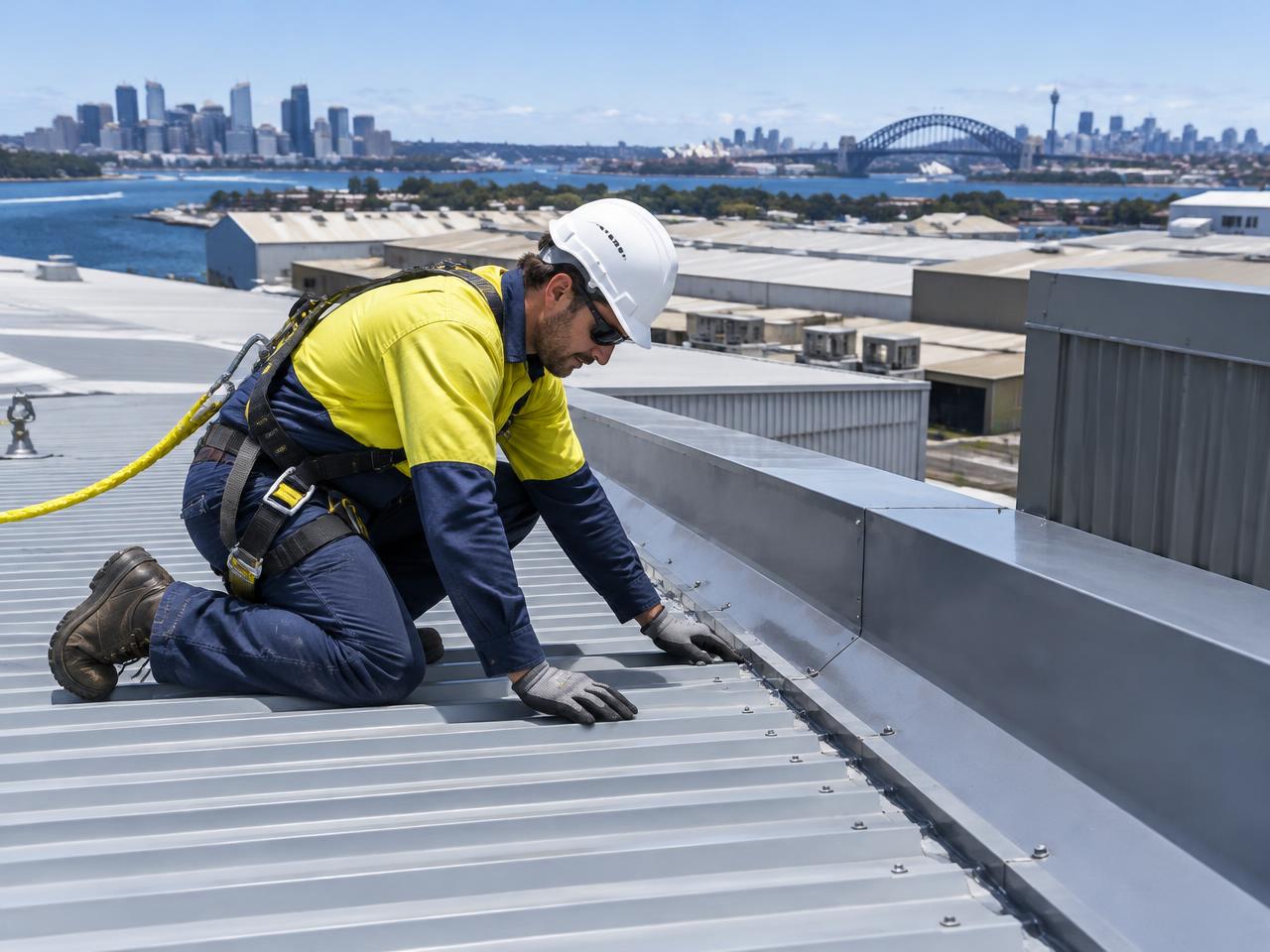
Loose or deteriorated fasteners are not a reason for an owner to tighten screws from a ladder. Incorrect work can damage components and access itself carries fall risks. A qualified contractor should determine whether washers, fixings or sheet sections need attention. Tell the contractor about added solar panels or other equipment because work around penetrations may need coordination with another specialist. Roof maintenance should not interfere with electrical or mechanical equipment without appropriate expertise.
Which warning signs can owners notice safely?
Useful observations include new ceiling staining, damp eaves, repeated gutter overflow and changes to the roof line visible from the ground. Note the timing of the symptom and whether it follows wind-driven rain or ordinary rainfall. The indoor location does not prove the entry point: water may travel before it appears. A photograph and a short record of conditions can be more useful than a guess about the damaged component.
Ground-level observation has limits. Hidden outlets, sheet laps behind parapets and roof areas obscured by equipment may not be visible. An absence of obvious damage does not prove that the whole roof is sound. Do not enter an unsafe roof space, climb onto the roof or touch electrical equipment affected by water. Arrange suitable investigation when symptoms persist, and keep people clear of unstable materials.
Does either material remove the need for gutter care?
No. Tile and metal roofs both rely on drainage paths appropriate to the building. Debris in gutters or valleys can contribute to overflow even where the coverings appear intact. A cleaning scope should identify accessible sections, outlets and any downpipe checks, while distinguishing cleaning from repairs or drainage redesign. Ask for damaged components and inaccessible sections to be reported so later work can be planned.
An inspection interval should reflect the property rather than the material alone. Nearby trees, recurring blockages and earlier defects can justify a different review schedule. Keep records of the sections cleared and the amount or location of debris so future decisions have context. NSW SES preparation guidance includes roof checks and regular clearing of gutters, drains and downpipes; safe access remains essential for any work at height.
How should you compare maintenance recommendations?
Compare the reasoning and scope, not just the name of a treatment. Ask which defects were identified, whether a leak source is confirmed, what materials will be used and which areas were not accessible. A recommendation for cleaning, repointing, repair or coating should follow the condition of the roof. Clarify whether the work is necessary for weatherproofing or optional appearance work; those are different objectives.
Ask how any newly discovered damage will be communicated before additional work proceeds. Keep the agreed scope, photographs and relevant product details after completion. If symptoms return, provide their location and the conditions in which they occur rather than assuming the original repair has the same cause. Maintenance records allow the next assessment to build on what is already known.
What about older roofing that may contain asbestos?
Do not identify asbestos by appearance alone or assume that an unfamiliar older sheet is ordinary metal. If there is a possibility of asbestos roofing or associated materials, stop before cleaning or disturbance and seek specialist identification. Do not pressure-wash, drill, cut, sand or break suspected material. The same caution can apply to gutters, downpipes, eaves and ridge components, not just the roof covering.
SafeWork NSW explains the risk of widespread contamination from high-pressure water or compressed air on asbestos materials. A normal roof maintenance visit is not a substitute for specialist advice or the applicable licensing and safety requirements. Tell the contractor about any existing asbestos reports before attendance and keep those documents with the property maintenance record.
From guidance to an agreed work scope
How is the source of a roof leak investigated?
The place where water appears indoors may not be the place where it enters the roof. Water can travel along framing, insulation or a sheet before it becomes visible. Tell the roofer when the symptom occurs, whether wind-driven rain makes it worse and what has changed recently. An assessment should consider nearby roof coverings, flashings, penetrations and drainage together. A visible stain alone does not establish the repair needed, and some concealed faults require further investigation before a cause can be confirmed.
- Photograph indoor staining and ground-level roof symptoms without climbing.
- Note the rooms affected and the timing of rain or overflow.
- Identify previous repairs, solar installations or other recent roof work.
What differs between tile and metal roof repairs?
On tiled roofs, a replacement must suit the existing tile profile and surrounding arrangement. Ridge bedding and pointing, valley condition and flashing junctions may also contribute to water entry. On metal roofs, the condition of sheets, laps, washers and compatible fixings needs attention. A generic sealant patch is not an appropriate answer to every defect. Ask whether the proposed repair addresses the likely cause, whether adjacent components are affected and what limitations remain after the agreed work.
- Assess cracked or displaced tiles alongside nearby drainage paths.
- Check metal sheet damage and fasteners before selecting compatible materials.
- Distinguish targeted repairs from broader restoration or replacement advice.
Sources and further reading
- NSW SES: prepare your home and property for flood and storm: Roof checks, clear gutters and downpipes, and storm preparation.
- SafeWork NSW: managing risks of exposure to asbestos: Avoid disturbing asbestos and never use high-pressure water or compressed air on asbestos materials.
Plan the next step for your Sydney roof
Start with a roof condition inspection, then discuss preventative roof maintenance, targeted roof repairs or gutter and drainage care as appropriate. Keep the report, access limitations and approved scope with your property records.
Continue with our Sydney roof maintenance checklist. Request a roof assessment or call 0424 699 183 to discuss your property.
Frequently asked questions
Is a metal roof maintenance-free?+
No. Metal roofs still need checks of sheets, laps, compatible fixings, flashings and drainage. The appropriate schedule depends on condition and exposure.
Should terracotta and concrete tiles receive the same treatment?+
Not automatically. Confirm the material and product requirements before selecting cleaning, repairs or a coating.
Can a new roof coating fix a leak?+
A coating should not substitute for investigating and repairing the water-entry source. Suitability depends on the roof material and condition.